


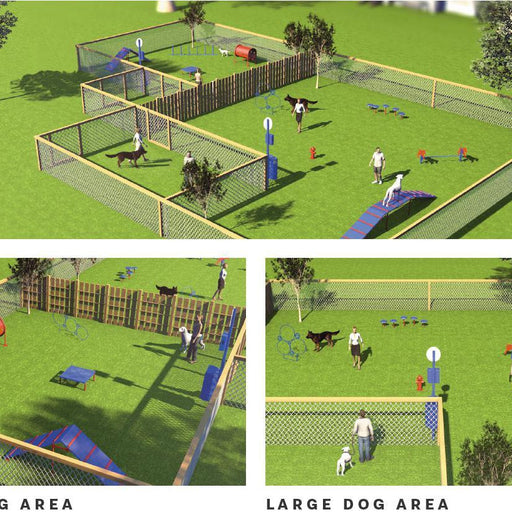


Commercial dog park equipment gives dogs dedicated space to run, jump, climb, and socialize in a structured, safe environment. It helps municipalities, property managers, and organizations meet growing demand for off-leash amenities—turning open green space into a purposeful destination that benefits pets, owners, and the surrounding community.
Common use cases include:
- Parks and recreation departments building public off-leash areas with structured activity zones.
- Apartment communities and HOAs adding a high-demand resident amenity that drives leasing and retention.
- Hotels and resorts catering to traveling pet owners with on-site dog runs.
- Veterinary clinics and boarding facilities creating outdoor enrichment and exercise areas.
- Corporate campuses offering pet-friendly perks that support employee satisfaction.
- Senior living communities providing accessible, low-impact outdoor interaction with therapy and companion animals.
When evaluating commercial dog park equipment, start with the space, the dog population, and how the park will be supervised. Most dog parks benefit from separating small and large dog areas, so plan fencing and gating accordingly. Equipment should encourage a range of activities—agility features like jumps, tunnels, and weave poles keep high-energy dogs engaged, while ramps, platforms, and balance beams support confidence-building for less active or older dogs. All components should be commercial-grade: powder-coated steel or aluminum frames, UV-resistant plastics, and chew-proof, claw-proof surfaces. Ground-level clearance matters to prevent digging and entrapment. Beyond equipment, factor in fencing (height, gauge, self-closing double gates), surfacing (drainage, mud control, paw-friendliness), and site amenities like waste stations, water fountains, and shaded seating for owners.
To narrow your options quickly, use filters and side-by-side comparisons to match equipment to:
- Activity type (agility, climbing, balancing, tunneling, jumping)
- Dog size and separation needs (small dog, large dog, all-size)
- Equipment material and chew/claw resistance
- Footprint and layout configuration (single features, bundled courses, full park packages)
- Fencing and gating system (height, gauge, entry style)
- Surfacing compatibility (natural grass, synthetic turf, gravel, mulch)
- Site amenities (waste stations, water access, shade structures, owner seating)
- Maintenance cycle and expected lifespan
Not sure which type? Read our guide → Complete Buyer's Guide to Commercial Dog Park Equipment