


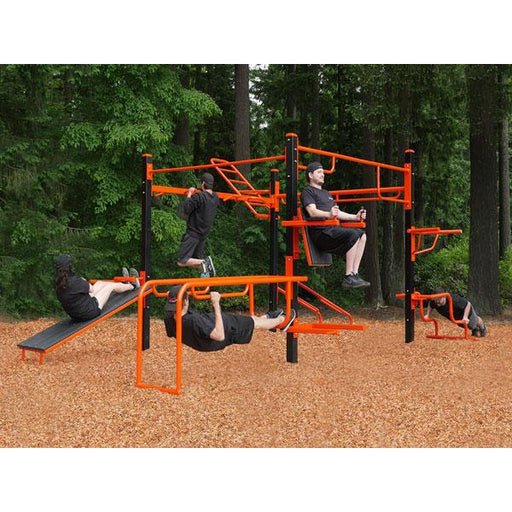
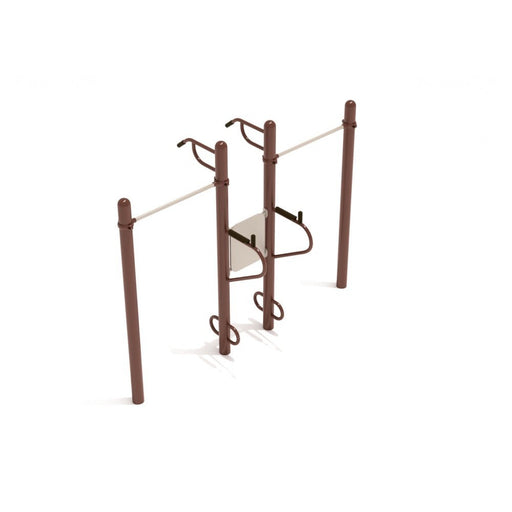
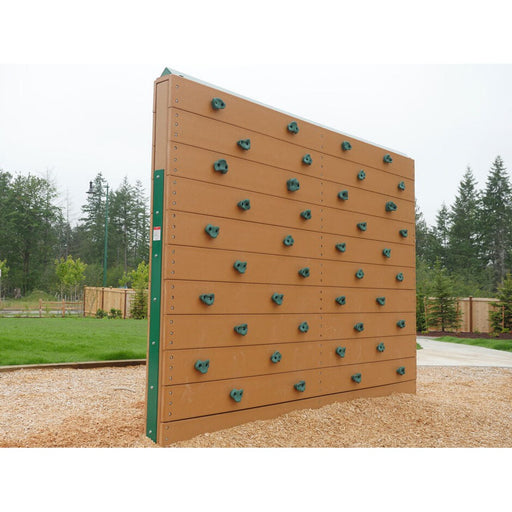
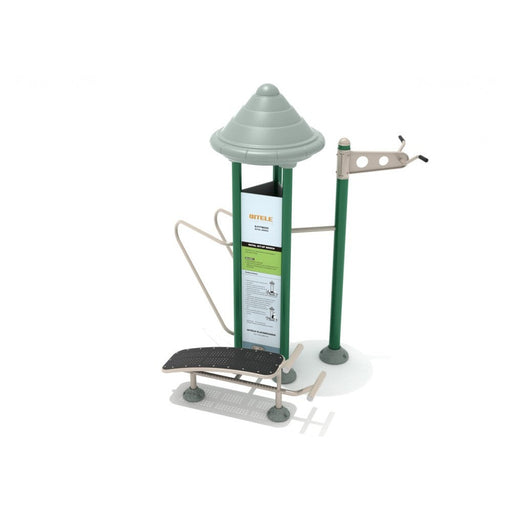

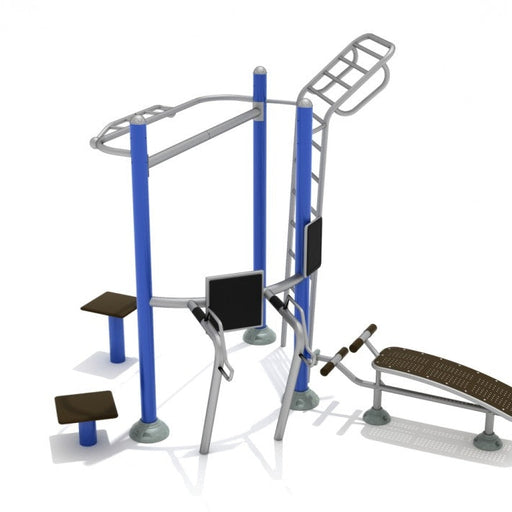
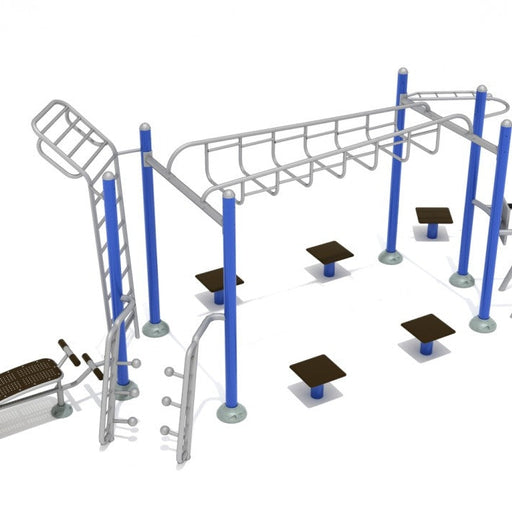

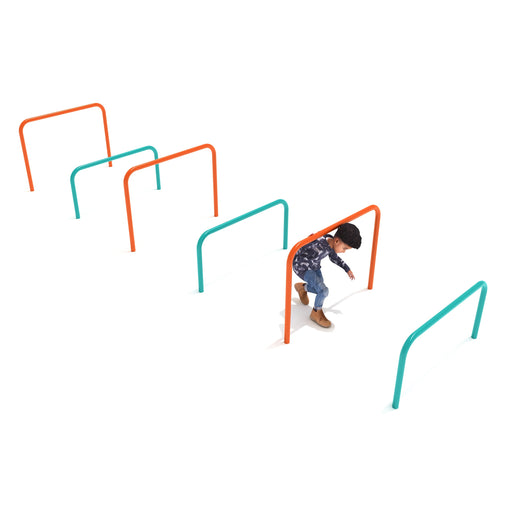


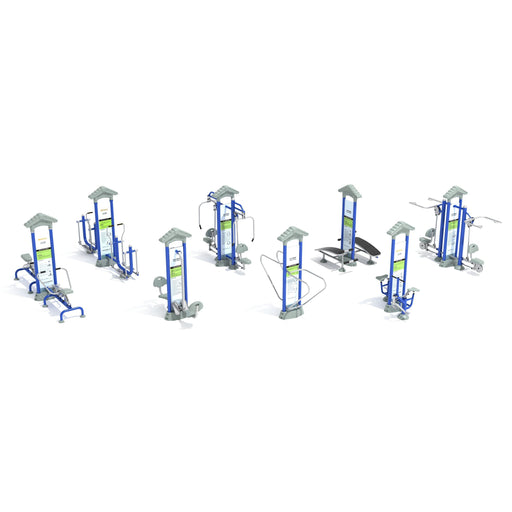


Outdoor fitness equipment for schools brings structured physical activity outside the gym, giving students a dedicated space to build strength, coordination, and healthy habits in the open air. It supports PE programming, athletic training, recess activity, and after-school use—while giving districts a durable, low-maintenance asset that serves the campus for years.
Common use cases include:
- Elementary schools adding age-appropriate movement and bodyweight stations to playgrounds or fields.
- Middle schools creating outdoor circuits that bridge recess play and structured PE curricula.
- High schools outfitting functional training zones for athletics, conditioning, and general fitness classes.
- Universities and community colleges expanding outdoor recreation and intramural fitness options.
- Special education programs incorporating inclusive, adaptive stations into outdoor learning environments.
When evaluating equipment for schools, start with the age group and how the space will be programmed. Elementary stations should emphasize movement, balance, and bodyweight play at appropriate heights and resistance levels. Middle and high school setups can introduce more targeted strength, cardio, and calisthenics stations that support PE standards and athletic conditioning. Consider peak-use scenarios—full class rotations, open recess, team training—and size the layout accordingly. Safety is paramount: look for equipment that meets ASTM and CPSC standards where applicable, with pinch-free designs, rounded edges, and clear instructional signage. Surfacing under and around stations should meet fall-height requirements. Durability expectations are high in school environments, so prioritize corrosion-resistant, graffiti-resistant finishes and tamper-proof hardware that can handle daily use by hundreds of students.
To narrow your options quickly, use filters and side-by-side comparisons to match equipment to:
- Age and grade range (elementary, middle, high school, university)
- Training type (bodyweight, strength, cardio, calisthenics, mobility, balance)
- PE curriculum alignment and instructional signage
- Layout and footprint (single stations, circuits, multi-user systems)
- Simultaneous user capacity and class rotation support
- Accessibility and inclusive design features
- Safety certifications (ASTM, CPSC) and surfacing requirements
- Vandal resistance, maintenance cycle, and expected lifespan
Not sure which type? Read our guide → Outdoor Fitness Equipment for Schools and Universities — Outdoor Workout Supply
Planning a project? Request an itemized quote with freight included — most are sent within 1 business day.
Authorized dealer for all carried brands — commercial-grade equipment, purchase orders accepted.
Installation available.