


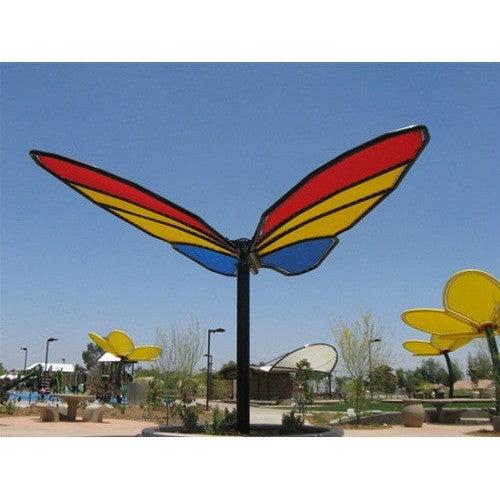
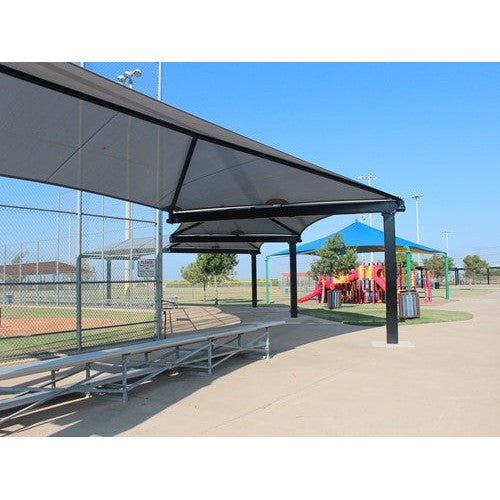
Commercial shade structures protect people, equipment, and outdoor spaces from sun, heat, and light rain—extending the usability and comfort of any outdoor environment. They reduce UV exposure, lower surface temperatures on playgrounds, seating areas, and equipment, and create defined zones that make large open spaces feel more intentional and inviting.
Common use cases include:
- Parks and playgrounds shielding play equipment and seating from direct sun and UV exposure.
- Schools and universities covering outdoor dining, courtyards, and athletic spectator areas.
- Apartment communities and HOAs adding comfort and curb appeal to pools, dog parks, and common areas.
- Hotels and resorts creating shaded lounge zones around pools, patios, and event spaces.
- Sports complexes and stadiums covering bleachers, dugouts, and warm-up areas.
- Commercial streetscapes and transit stops providing pedestrian comfort and weather protection.
When evaluating shade structures, start with the area you need to cover and the primary function—UV protection, rain mitigation, heat reduction, or a combination. Structure type drives most downstream decisions: hip roofs and cantilevers offer maximum overhead coverage, sail shades create a modern aesthetic with flexible geometry, and pergolas and canopies blend architectural character with functional shade. Fabric selection matters as much as frame design—look for commercial-grade HDPE or PVC membranes with high UV block ratings, fire retardancy, and mildew resistance. Steel or aluminum frames should be hot-dip galvanized or powder-coated for corrosion resistance. Engineering requirements vary by location, so confirm wind load, snow load, and local permitting needs early. Anchoring method (surface-mount, in-ground footing, building-attached) depends on the substrate and whether the structure is permanent or relocatable.
To narrow your options quickly, use filters and side-by-side comparisons to match structures to:
- Structure type (hip, cantilever, sail shade, pergola, canopy, umbrella)
- Coverage area and mounting height
- Fabric type and UV block rating
- Frame material (steel, aluminum, wood, composite)
- Wind and snow load rating
- Mounting method (in-ground, surface-mount, wall-attached, freestanding)
- Permanent vs. relocatable installation
- Custom color, branding, and design options
- Permitting and engineering certification requirements
Not sure which type? Read our guide → Complete Buyer's Guide to Commercial Shade Structures