
Give Us a Call!

If you are planning a commercial climbing wall project, you will eventually face a choice that shapes everything else: do you buy a modular climbing wall system or commission a custom installation? Both can be safe, durable, and program-ready. The difference is how you trade off cost predictability, design flexibility, and lead time.
For B2B buyers in schools, parks, senior living, hospitals, hotels, and municipalities, the right decision is rarely about “best” and more about “best fit” for the facility’s space, staffing reality, procurement process, and opening date.

To get comparable quotes, it helps to define these terms the way commercial/institutional buyers use them.
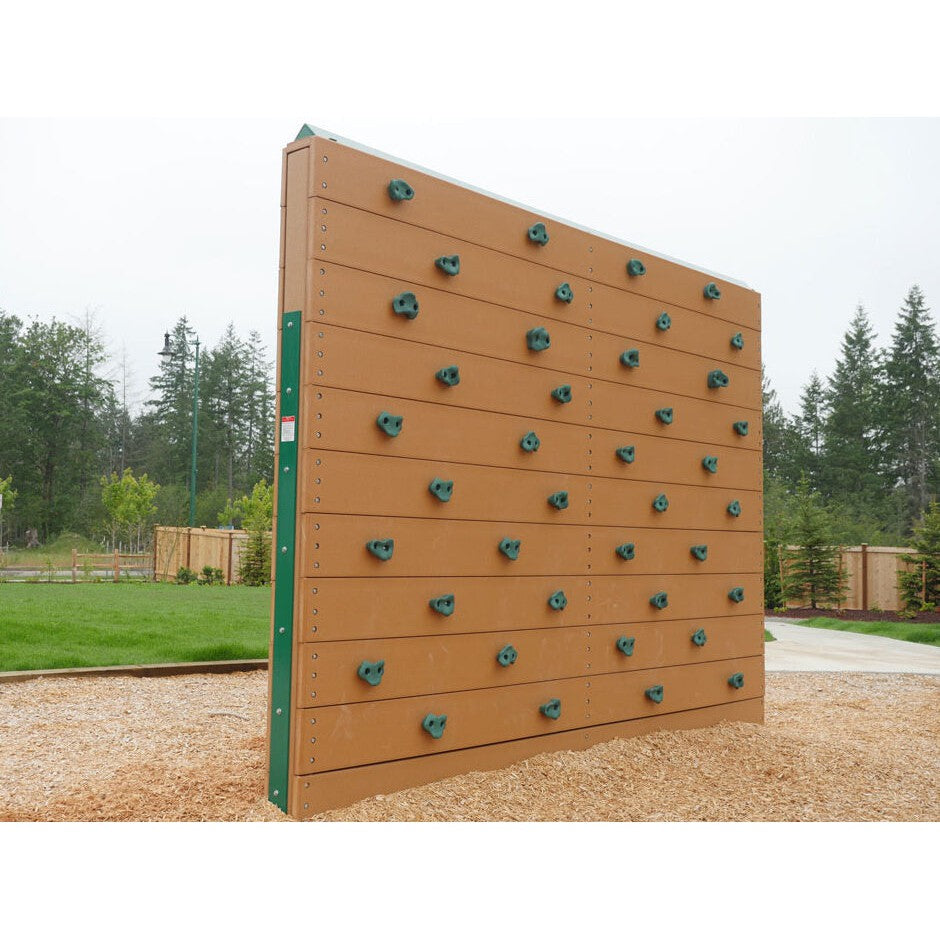
Modular systems use standardized components that can be combined in many layouts. Depending on the manufacturer, “modular” can include:
Modular does not have to look generic. It simply means the system is built from repeatable building blocks.
Custom walls are designed to fit a specific site and aesthetic with fewer constraints on geometry. Custom projects often involve:
A custom wall is typically “locked” earlier in the design process because it is fabricated specifically for that space.
Contact us with your ceiling height, available footprint, and target opening date. We will help you determine whether a modular system or custom installation best aligns with your budget and procurement timeline.
Institutional buyers are often balancing:
Modular vs custom affects:
Many buyers assume modular means “small” and custom means “full gym.” In practice, both approaches can support multiple wall types.
Hybrid layouts (traverse + bouldering + a few vertical lanes) can be either modular or custom.
The key is to align the configuration to:
Browse products to compare modular configurations and custom-style design options, and identify the wall types that match your facility’s intended programs.

Costs vary by region, scope, and building conditions, but the cost drivers tend to be consistent.
Modular systems often lower cost by reducing:
Because the “parts list” is more standardized, the pricing is often more predictable.
Custom walls can increase cost due to:
However, custom can sometimes reduce other costs if it:
Institutional buyers should compare:
A slightly higher upfront cost can be justified if it increases throughput or reduces staffing burden.
Flexibility is often the deciding factor for schools, parks, and community facilities.
Modular systems are often better when you want:
They are also easier to standardize across multiple sites for municipalities or school districts.
Custom walls can be flexible in programming because they often include:
But custom projects are typically less flexible in “physical change” because the wall was built for that specific space.
If your facility expects significant future changes, modular can reduce long-term risk.
Request a quote for a modular base design with custom-style alternates. This approach often produces the most comparable bids and the most defensible purchasing decision.

Lead time is not only fabrication time. It includes decision-making, approvals, and site readiness.
Modular projects often:
This can support tighter schedules, especially when the project needs to open for a semester start, summer programming, or a public grand opening.
Custom projects often take longer because:
If your project is part of a broader construction timeline, custom can still work well. The key is to start early enough.
Both modular and custom installs can be delayed by:
A strong early checklist reduces schedule risk more than any single product decision.
Contact us with your project calendar and we will map likely lead times, decision points, and site-prep requirements to help protect your opening date.
Different organizations tend to prioritize different outcomes.
Often prioritize:
Common fit:
Often prioritize:
Common fit:
Often prioritize:
Common fit:
Often prioritize:
Common fit:
Often prioritize:
Common fit:
Use these questions to align internal stakeholders.
If you expect to grow the program, modular supports add-ons and phased builds more naturally.
The “best” wall is the one you can operate consistently.
Confirm:
Plan for:
Procurement method can influence the best approach. Modular systems often simplify competitive bidding because scope is easier to define.
Request a quote with your drawings and program goals. We will provide modular and custom-alternative options with clear assumptions so you can compare bids fairly.

Are modular climbing walls lower quality than custom walls?
Not necessarily. Modular systems can be high quality and durable. “Modular” describes how the wall is built and specified, not the quality level.
Which option is faster to deliver and install?
Modular systems often reduce lead time and schedule risk because scope and components are more standardized. Custom walls can be efficient too, but they require earlier design lock-in.
Which option is better for future expansion?
Modular systems typically make expansion simpler because additional components can be added with predictable interfaces. Custom walls can expand in some cases, but it is usually more complex.
Is modular always cheaper than custom?
Not always. Modular is often more cost-predictable. A custom wall may cost more upfront, but can deliver more usable surface area or better flow in certain spaces.
How do we make quotes comparable if we are unsure?
Request a modular base design and allow alternates for custom features or expanded geometry. Require vendors to list assumptions and exclusions.
How does wall type (bouldering vs roped climbing) affect the decision?
Both modular and custom approaches can support bouldering and rope systems. The decision is more about geometry, site constraints, and procurement than about climbing mode alone.
What documentation should institutional buyers request?
Request shop drawings, structural verification requirements, installation readiness checklists, warranty terms, and inspection/maintenance guidance.
What is the biggest risk in custom projects?
Late changes after design lock-in. If building conditions or stakeholder requirements change, custom fabrication can be harder to adjust.
What is the biggest risk in modular projects?
Assuming modular means “one size fits all.” Modular still needs thoughtful layout for flow, supervision, and programming goals.
What information do you need to recommend the best approach?
Ceiling height, available footprint, intended users, programming plan, staffing model, drawings or photos of the site, and your target opening date.
Modular and custom climbing walls can both deliver safe, durable, high-participation programs. Modular systems tend to excel in predictability, phased growth, and schedule protection. Custom installations excel in architectural fit and signature design. The best choice is the one that aligns with your facility constraints, procurement realities, and long-term program goals.
Next steps


