










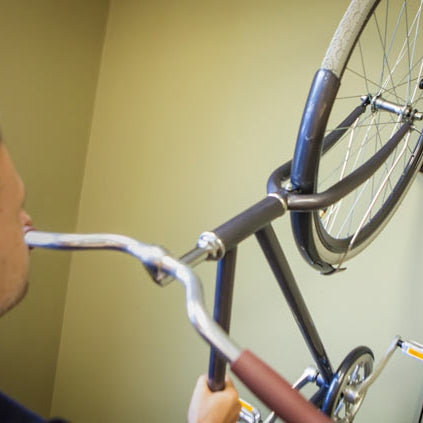
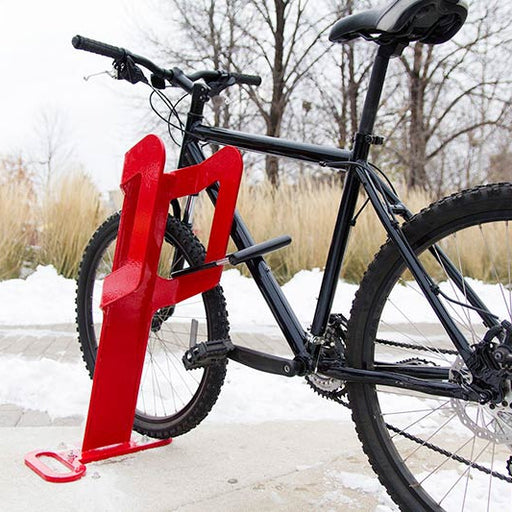


Commercial bike racks provide secure, organized parking for cyclists at destinations where reliable bike storage matters. They encourage cycling as a practical mode of transportation, reduce vehicle congestion, and signal that a facility is accessible and welcoming to riders—whether commuters, students, residents, or visitors.
Common use cases include:
- Parks, trails, and recreation areas offering convenient parking at trailheads and amenity zones.
- Schools and universities managing high-volume daily bike storage across campus.
- Apartment communities and HOAs providing dedicated, organized resident bike parking.
- Corporate campuses and office buildings supporting bike commuters with secure, covered options.
- Retail centers, restaurants, and downtown streetscapes encouraging bike-friendly foot traffic.
- Transit hubs and multimodal stations connecting cyclists to bus, rail, and ferry systems.
When evaluating commercial bike racks, start with volume, security level, and site context. Estimate peak bike parking demand and plan for growth—undersized installations lead to bikes locked to fences, poles, and railings. Decide whether you need basic short-term parking (inverted-U, post-and-ring) or higher-security options for longer dwell times (enclosed lockers, two-point locking systems). Rack design should support a variety of bike types and frame sizes without causing damage—avoid wheel-only racks that bend rims and don't prevent theft. Materials should be commercial-grade: galvanized or stainless steel, powder-coated finishes, and tamper-resistant mounting hardware rated for outdoor exposure. Placement matters as much as the rack itself—prioritize visibility, proximity to building entrances, lighting, and protection from weather. Check local zoning codes and any applicable bicycle parking ordinances for minimum capacity and spacing requirements.
To narrow your options quickly, use filters and side-by-side comparisons to match racks to:
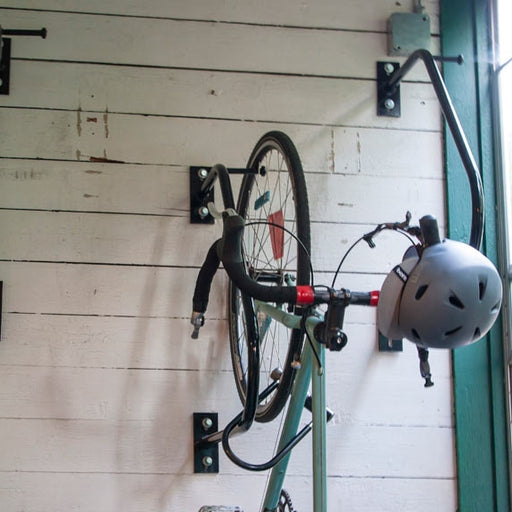
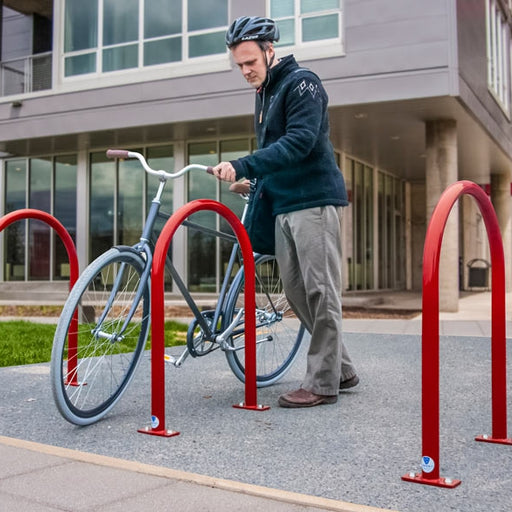
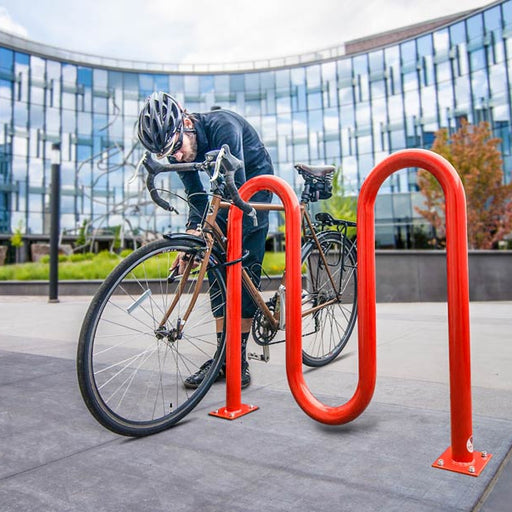
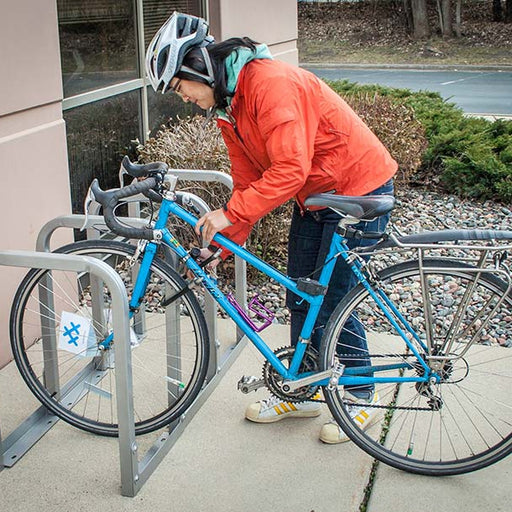
- Rack style (inverted-U, post-and-ring, wave, grid, vertical, enclosed locker)
- Bike capacity and spacing per unit
- Security level (basic parking, two-point lock support, fully enclosed)
- Mounting type (surface-mount, in-ground, freestanding, wall-mount)
- Material and finish (galvanized steel, stainless steel, powder-coated, thermoplastic-coated)
- Covered or uncovered configuration
- ADA clearance and accessible aisle spacing
- Custom branding, color, and aesthetic options
Not sure which type? Read our guide → Complete Buyer's Guide to Commercial Bike Racks
Planning a project? Request an itemized quote with freight included — most are sent within 1 business day.
Authorized dealer for all carried brands — commercial-grade equipment, purchase orders accepted.
Installation available.