
Give Us a Call!

Elementary playground equipment is commercial playground equipment selected for school-age children and for public sites such as schools, churches, parks, community centers and compact shared spaces. For an institutional buyer, the right choice starts with age range, capacity, accessibility, safety zone, surfacing plan and quote logistics.
Outdoor Workout Supply carries playground structures through the Playground Equipment collection, including Playground Equipment Butler Overlook. Its product page shows the kind of project data a buyer should gather before quoting: model, age range, safety zone, child capacity, fall height, accessibility and installation type. For slide-specific configurations, straight, spiral, tube and embankment options, see our Commercial Playground Slides buying guide.
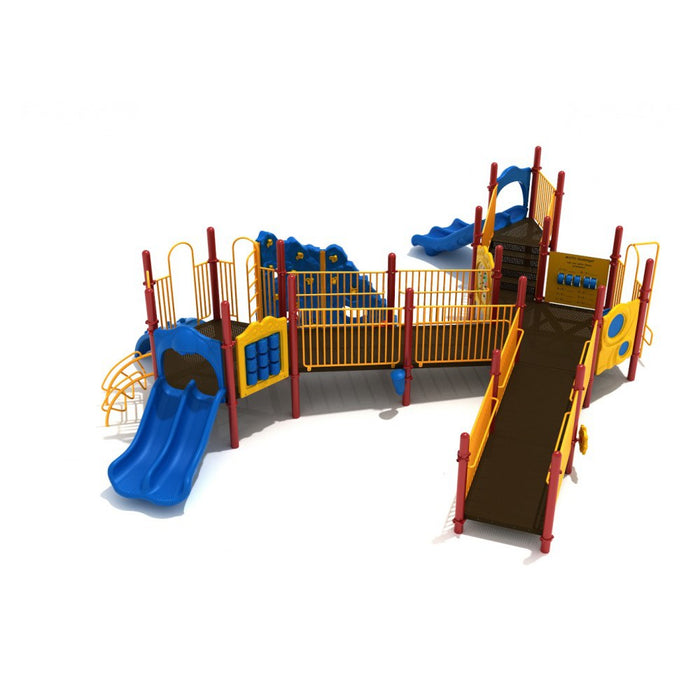
The best fit is the equipment mix that serves the user group without overbuilding the site: elementary schools usually need durable recess equipment, churches often need broad-age shared play areas, public playgrounds need accessible and maintainable equipment, and small playgrounds need high play value in a compact footprint.
| Buyer segment | Best-fit equipment focus | What to verify before quoting |
|---|---|---|
| Elementary school | School-age composite structures, climbers, slides, swings and accessible play events. | Grade bands served, recess capacity, supervision sightlines, safety zone and surfacing plan. |
| Middle school | Older-child climbing, upper-body challenge events and hangout zones. | Age range, fall height, site circulation and whether younger children will also use the area. |
| Church or community center | Broad-appeal play structures, shade-adjacent seating and compact layouts that work during events. | Mixed-age use, weekend traffic, after-hours access, fencing and install timing. |
| Public playground | Accessible structures, ground-level activities, durable decks, swings and slides. | ADA access route, public maintenance plan, surfacing depth and replacement-part availability. |
| Small playground | Compact composite structures, climber-slide combinations and a few high-use independent events. | Use zone, fall height, drainage, border dimensions and whether future expansion is likely. |
The best elementary school playground equipment usually combines climbing, sliding, balancing, imaginative play and inclusive ground-level activity, because a single component rarely serves the full recess population well.
For younger elementary students, prioritize lower decks, transfer access, panels and manageable climbing routes. For older elementary students, add challenge climbers, overhead events, taller slides where the site and surfacing support them, and open circulation so supervisors can see across the play area. The Playworld school-age playground page frames school-age playgrounds around children ages 5-12 and inclusive use.
Common playground equipment categories include composite play structures, slides, climbers, swings, spinners, spring riders, balance events, outdoor musical play, shade, benches and safety surfacing.
OWS's playground navigation separates the category by age, location and type, including kids, schools, churches, parks, playsets, slides, swings, surfacing and outdoor climbing walls. That is useful during planning: start with the user group, then narrow by equipment type, then confirm the footprint.
A small playground should be planned around the use zone first, then the main structure, then the supporting pieces; forcing too many components into the space usually creates a worse project than choosing one strong structure and leaving circulation clear.
Compact sites can still serve schools, churches and community properties if the quote starts with the hard constraints: available rectangle, fall-height surfacing, drainage, delivery access and whether the site needs accessible ground-level play. Butler Overlook is not a small-playground default, but its product page is a good example of the details to collect before comparing options: age range, safety zone, child capacity, fall height, post diameter, accessibility and installation type.
A useful playground quote request should include site type, age range, approximate space, desired equipment categories, accessibility goals, surfacing needs, installation expectations and delivery constraints.
OWS product pages route buyers through the quote cart: add products with the Add to Cart / Quote button, review the cart, then request a formal quote. For the Butler Overlook structure, use the product page and quote cart for the current live price; the page states that professional installation is available by contacting OWS for details.
The table below is a planning comparison, not a substitute for a site-specific quote; it shows how different equipment families tend to solve different buyer problems.
| Equipment type | Primary value | Best for | Quote note |
|---|---|---|---|
| Composite play structure | Many activities in one footprint | Elementary schools, public playgrounds, churches | Confirm age range, capacity, safety zone and fall height. |
| Climbers and overhead events | Challenge and upper-body movement | Older elementary and middle-school users | Match challenge level to the youngest expected user group. |
| Slides and transfer-access events | Familiar play value and inclusive routing | Broad-age school and church sites | Check access points and surfacing below exit zones. |
| Swings, spinners and spring riders | Independent play events outside the main structure | Sites with enough extra use-zone space | Separate use zones can drive footprint more than expected. |
| Shade, benches and surfacing | Comfort, access and long-term usability | Public and high-traffic sites | Often quoted alongside the play structure rather than after it. |
Seesaws have not disappeared, but modern public playgrounds tend to use more controlled rocking and spring-centered designs, and every moving component needs careful age, surfacing and use-zone review before it belongs in a school or public layout.
For a deeper component-level discussion, see OWS's article on seesaws, teeter-totters and spring riders. For this buyer-segment article, choose motion equipment only after the main play structure, circulation and surfacing plan are settled.
For adjacent decisions, compare inclusive playground equipment, playground surfacing thickness and playground grants for schools. Once equipment is installed, our playground equipment parts guide covers sourcing compatible replacement components and a maintenance schedule to keep it in service. Those topics are separate from this article's buyer-segment scope, but they often affect the same quote package.
Parts of this article were drafted with AI assistance; every factual claim was sourced, checked, and edited by our team before publication.
The best elementary playground equipment for a school is usually a commercial composite structure with age-appropriate climbers, slides, transfer access, ground-level play and enough capacity for recess scheduling.
Churches can often use the same commercial playground equipment as schools, but they should plan for mixed-age use, event traffic, supervision, fencing and whether the playground is open to the public outside church programming.
A public playground should include accessible routes, durable equipment, clear circulation, impact-attenuating surfacing, shade or seating where appropriate, and a maintenance plan before the equipment is ordered.
Start a playground quote by choosing the collection or products that match the project, adding candidates to the OWS quote cart and sending site constraints with the request; the Butler Overlook product page shows the quote-cart flow and the kind of product specifications OWS uses to scope a project.
Related guide: Themed commercial playground structures compares pirate ship, castle and space-themed options by age range, use zone and footprint.


